
Explore Unit Categories
Understanding Unit Conversion: The Ultimate Guide to Measurement Systems, Formulas, and Real-World Applications
Introduction
Unit conversion is a fundamental concept used in everyday life, science, engineering, and global trade. Whether you are converting kilometers to miles, kilograms to pounds, or Celsius to Fahrenheit, understanding how unit conversion works is essential for accuracy and consistency.
In a world where multiple measurement systems coexist, being able to convert units quickly and correctly helps avoid errors, improves efficiency, and ensures clear communication. This comprehensive guide explains everything you need to know about unit conversion, including formulas, systems, examples, and real-world applications.
What Is Unit Conversion?
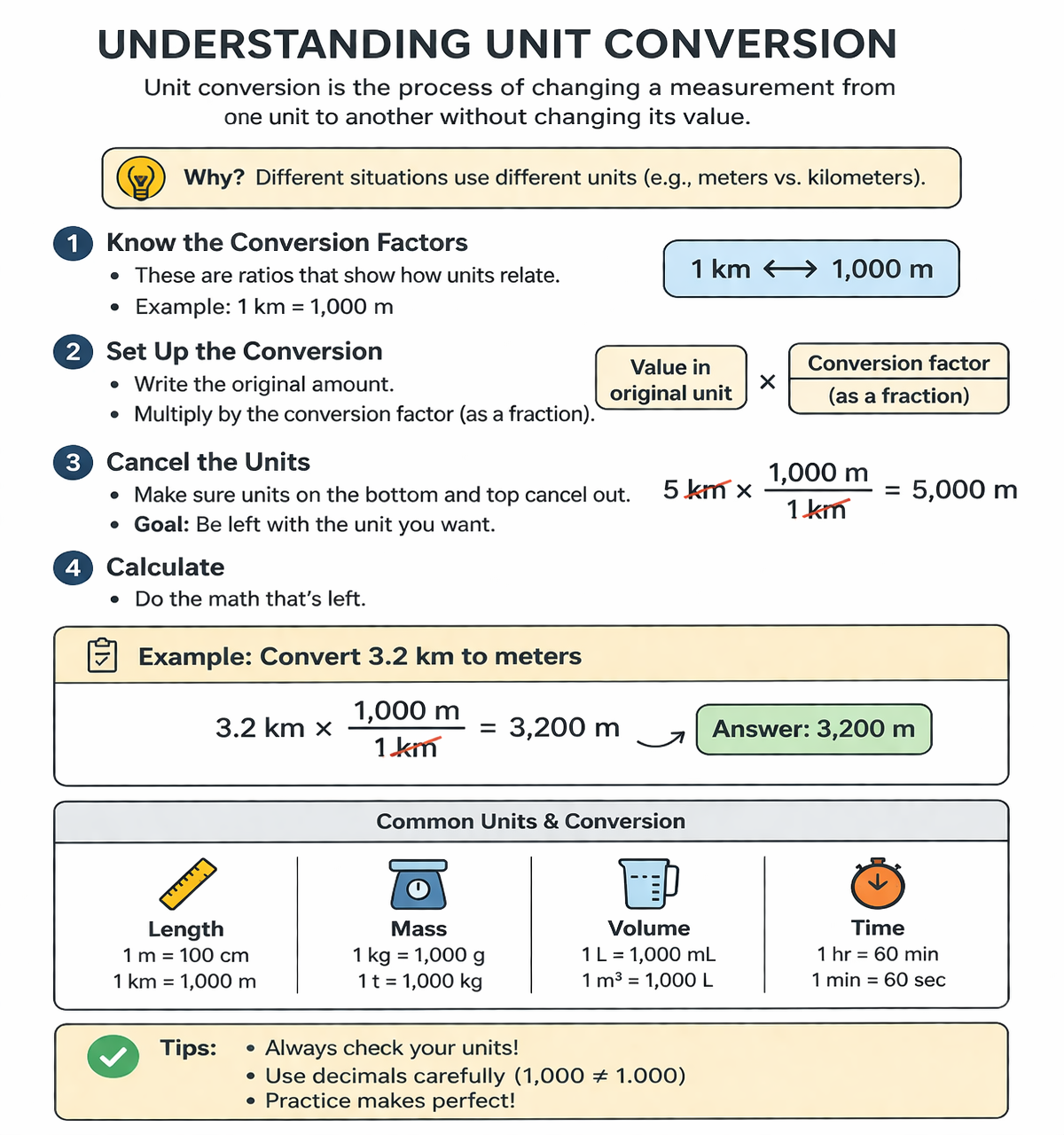
Unit conversion is the process of changing a measurement from one unit to another while maintaining the same value. It allows measurements to be understood across different systems, such as metric and imperial.
For example, converting 10 kilometers to miles does not change the actual distance—it simply expresses it in a different unit.
Why Unit Conversion Is Important
- Ensures consistency across different measurement systems
- Prevents costly errors in science and engineering
- Supports international trade and communication
- Improves accuracy in everyday calculations
Measurement Systems Explained
Metric System
The metric system is a decimal-based system used worldwide. It is built on powers of ten, making conversions simple and logical.
- Length: meter (m)
- Mass: kilogram (kg)
- Volume: liter (L)
Imperial System
The imperial system is primarily used in a few countries. It includes units like inches, feet, miles, pounds, and gallons.
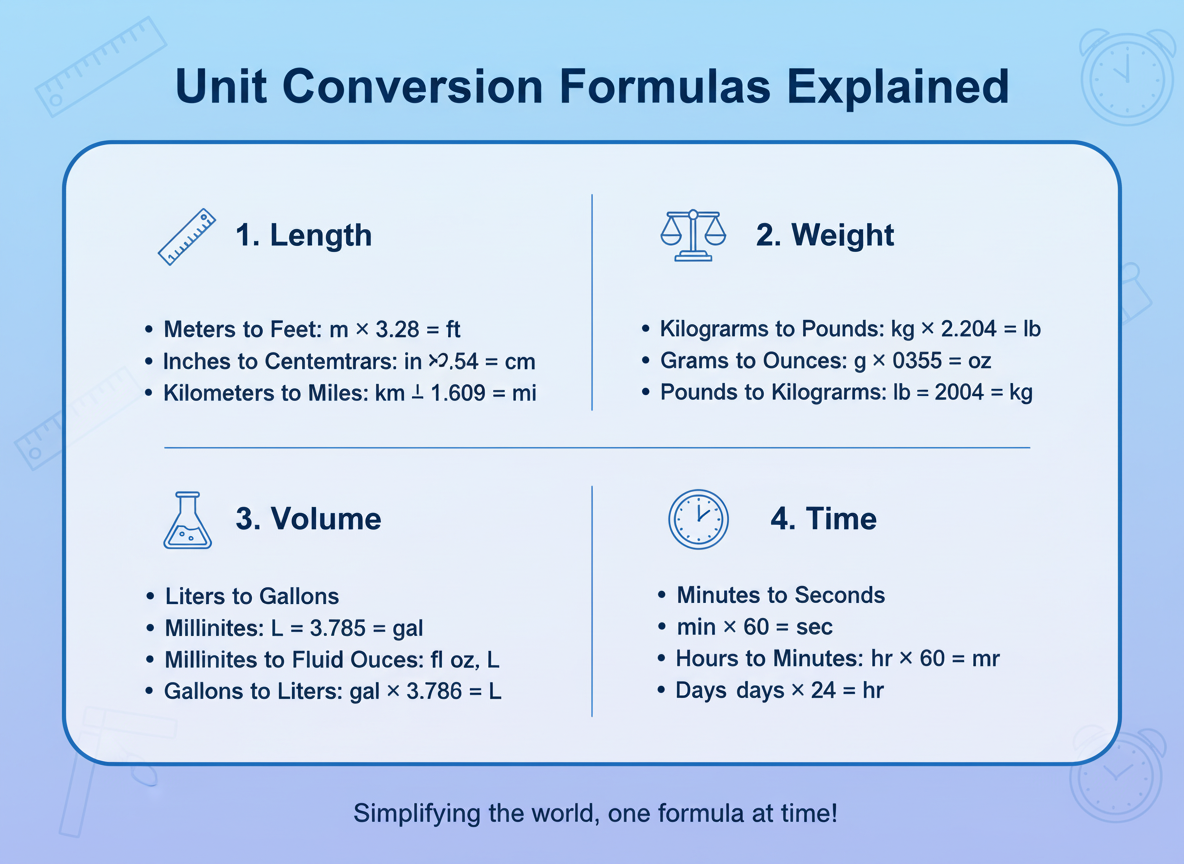
Unlike the metric system, it uses irregular conversion factors, which makes calculations more complex.
Common Types of Unit Conversions
Length Conversion
Length conversion is used to measure distance and size.
- 1 kilometer = 0.621371 miles
- 1 meter = 3.28084 feet
- 1 inch = 2.54 centimeters
Mass Conversion
Mass conversion is important in cooking, science, and industry.
- 1 kilogram = 2.20462 pounds
- 1 gram = 0.035274 ounces
Temperature Conversion
Temperature conversion is widely used in weather forecasting and science.
- Celsius to Fahrenheit: (°C × 9/5) + 32
- Fahrenheit to Celsius: (°F − 32) × 5/9
Volume Conversion
- 1 liter = 0.264172 gallons
- 1 milliliter = 0.033814 ounces
Time Conversion
- 1 hour = 60 minutes
- 1 day = 24 hours
How to Convert Units Step by Step
Step 1: Identify the Units
Determine the unit you are converting from and the unit you want to convert to.
Step 2: Find the Conversion Factor
Use a known conversion ratio between the two units.
Step 3: Apply the Formula
Multiply or divide the value by the conversion factor.
Step 4: Check Your Result
Ensure the result makes sense and matches expected values.
Conversion Examples
Kilometers to Miles
10 km × 0.621371 = 6.21371 miles
Kilograms to Pounds
5 kg × 2.20462 = 11.0231 pounds
Celsius to Fahrenheit
25°C × 9/5 + 32 = 77°F
Real-World Applications of Unit Conversion
Engineering
Engineers rely on precise unit conversions to design structures, machines, and systems safely and efficiently.
Healthcare
Accurate measurements are critical for medication dosages and patient care.
Cooking
Recipes often require converting between grams, ounces, liters, and cups.
Travel
Travelers need to convert distances, temperatures, and currencies when visiting other countries.
Science
Scientific experiments require consistent units to ensure accurate results.
Common Mistakes in Unit Conversion
- Using the wrong conversion factor
- Forgetting to convert units fully
- Mixing metric and imperial units incorrectly
- Rounding errors
Tips for Accurate Conversion
- Always double-check formulas
- Use reliable conversion tools
- Keep units consistent throughout calculations
- Practice common conversions regularly
Advantages of Using Online Unit Converters
Online converters provide instant and accurate results without manual calculations. They reduce errors and save time.
- Fast results
- High accuracy
- Easy to use
- Supports multiple unit categories
The Future of Unit Conversion
As technology advances, unit conversion tools are becoming more integrated into digital platforms, making conversions even faster and more accessible.
Artificial intelligence and automation are expected to further simplify measurement calculations in the future.
Conclusion
Unit conversion is an essential skill that supports accuracy, efficiency, and global communication. Whether you are working in science, engineering, or everyday life, understanding how to convert units ensures reliable results.
By mastering conversion formulas and using modern tools, you can handle any measurement challenge with confidence.
Most Used Conversions
Frequently Asked Questions
How do you convert Understanding Unit Conversion?
To convert between units, multiply the value by the correct conversion factor. Our calculator automatically applies this formula to give you an instant and accurate result.
What is the formula for Understanding Unit Conversion?
The conversion formula is based on a fixed relationship between the two units. In general, you multiply the input value by a constant factor to get the converted result.
Is this conversion calculator accurate?
Yes. This tool uses standardized conversion formulas and internationally accepted measurement definitions to ensure precise results.
Can I convert decimal values?
Yes. You can enter decimal numbers and the calculator will return highly accurate results instantly.
Why is unit conversion important?
Unit conversion ensures consistency across different measurement systems such as metric and imperial. It is essential in science, engineering, construction, and everyday calculations.
Which measurement systems are supported?
This converter supports both metric (SI units) and imperial systems, allowing accurate conversions across different standards.
Can I use this tool on mobile devices?
Yes. The converter is fully responsive and works on mobile phones, tablets, and desktop devices.
Is this tool free to use?
Yes. The converter is completely free and available for unlimited use without any restrictions.