
Loading...
Explore Unit Categories
Kilograms to Pounds Conversion: Complete Guide
Converting kilograms to pounds is one of the most commonly used weight conversions in the world. Whether you’re working in fitness, shipping, cooking, or science, understanding how to convert between kilograms (kg) and pounds (lb) is essential. This guide provides a complete breakdown of the conversion formula, real-world applications, examples, and tables to help you fully understand this important measurement.
What Is a Kilogram?
A kilogram is the base unit of mass in the International System of Units (SI). It is widely used around the world for measuring weight in everyday life, science, and industry. One kilogram is defined as the mass of a specific platinum-iridium alloy cylinder stored in France, although modern definitions are based on fundamental physical constants.
Kilograms are used in most countries globally, especially in Europe, Asia, and scientific communities.
What Is a Pound?
A pound is a unit of weight commonly used in the United States and a few other countries. It belongs to the imperial system and is widely used in daily life, including body weight, groceries, and shipping.
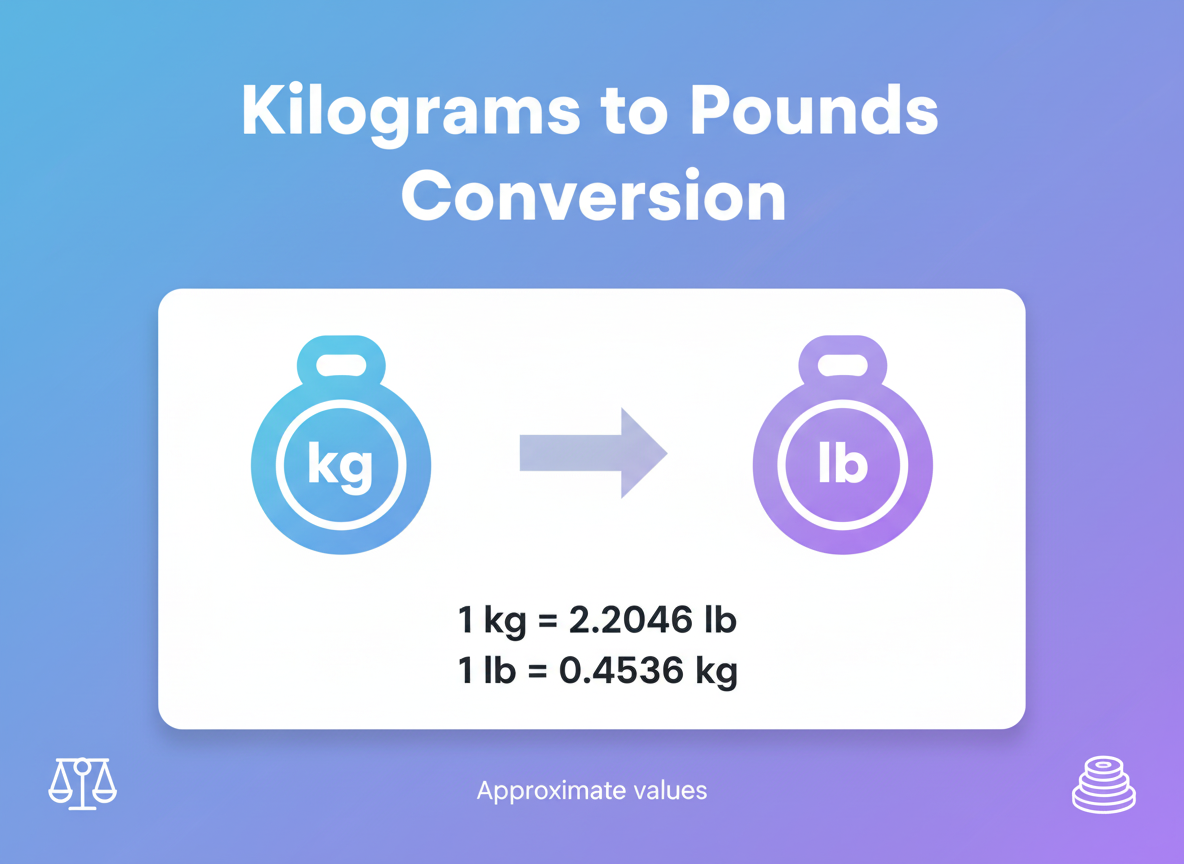
One pound is equal to approximately 0.453592 kilograms.
Kilograms to Pounds Formula
To convert kilograms to pounds, use the formula:
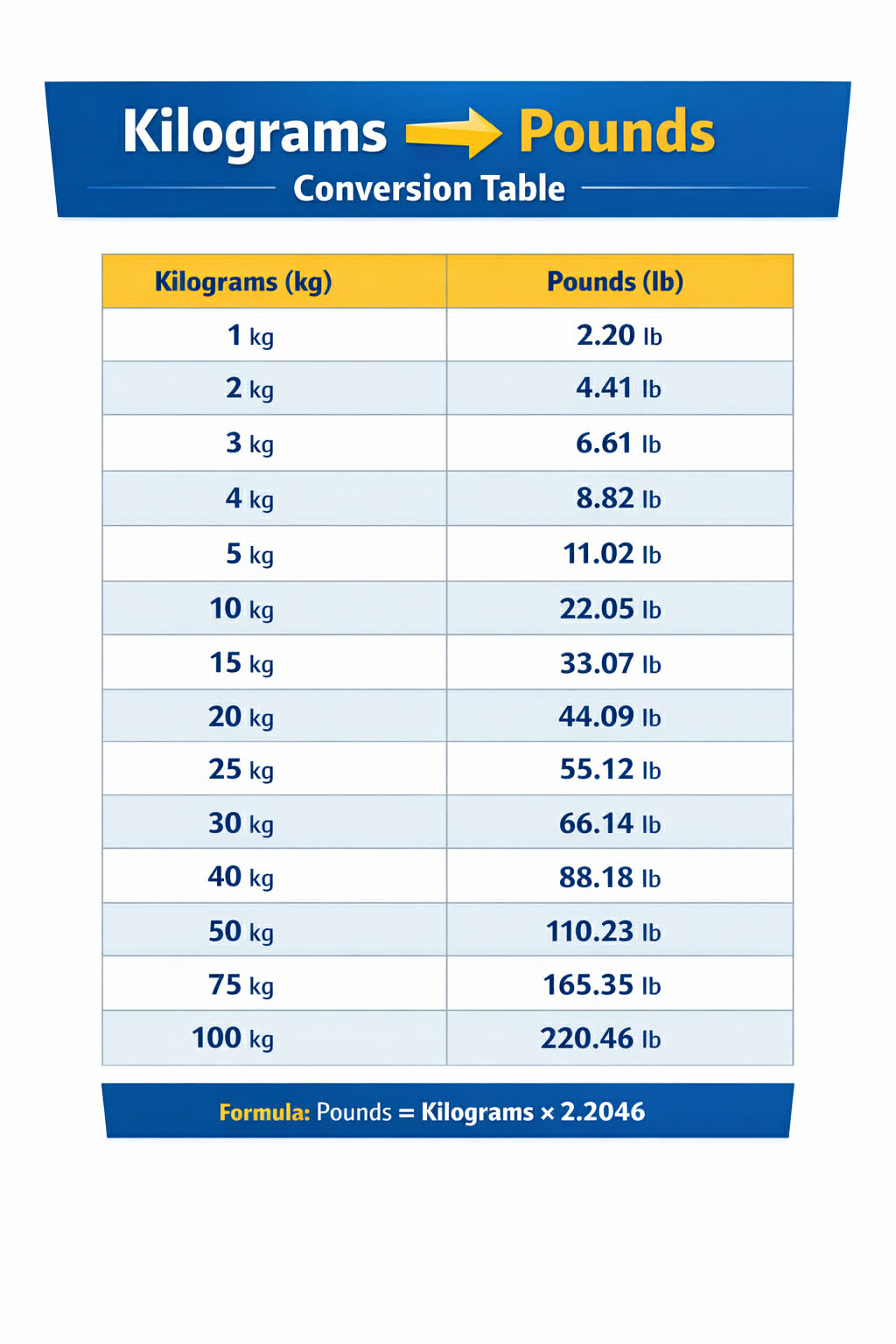
Pounds = Kilograms × 2.20462
This means that one kilogram equals approximately 2.20462 pounds.
Step-by-Step Example
Convert 10 kilograms to pounds:
- 10 × 2.20462 = 22.0462
- Answer: 10 kg = 22.05 lb
Why This Conversion Matters
Understanding kilograms to pounds conversion is critical across many industries. In fitness, body weight is often measured in pounds in the United States, while most of the world uses kilograms. This makes conversion necessary when comparing results internationally.
In logistics and shipping, weight calculations are essential for pricing and safety. Incorrect conversions can lead to inaccurate shipping costs or even safety hazards.
Common Use Cases
- Fitness and body weight tracking
- International shipping and logistics
- Cooking and food measurements
- Scientific research
- Medical records
Quick Mental Conversion Trick
For quick estimates:
- Multiply kilograms by 2
- Add 10% of the value
Example: 10 kg → 20 + 2 = 22 lb (very close to actual value)
History of Kilograms and Pounds
The kilogram originates from the metric system introduced during the French Revolution. It was designed to standardize measurements across countries.
The pound has a much older history, dating back to Roman times. It has evolved over centuries into the modern imperial pound used today.
Accuracy Tips
- Use full conversion factor (2.20462)
- Avoid rounding too early
- Use calculators for precision
Conclusion
Converting kilograms to pounds is simple once you understand the formula. Whether you’re tracking weight, shipping goods, or working internationally, mastering this conversion ensures accuracy and efficiency in everyday tasks.
Most Used Conversions
Frequently Asked Questions
How do you convert Kilograms to Pounds Conversion: Complete Guide?
To convert between units, multiply the value by the correct conversion factor. Our calculator automatically applies this formula to give you an instant and accurate result.
What is the formula for Kilograms to Pounds Conversion: Complete Guide?
The conversion formula is based on a fixed relationship between the two units. In general, you multiply the input value by a constant factor to get the converted result.
Is this conversion calculator accurate?
Yes. This tool uses standardized conversion formulas and internationally accepted measurement definitions to ensure precise results.
Can I convert decimal values?
Yes. You can enter decimal numbers and the calculator will return highly accurate results instantly.
Why is unit conversion important?
Unit conversion ensures consistency across different measurement systems such as metric and imperial. It is essential in science, engineering, construction, and everyday calculations.
Which measurement systems are supported?
This converter supports both metric (SI units) and imperial systems, allowing accurate conversions across different standards.
Can I use this tool on mobile devices?
Yes. The converter is fully responsive and works on mobile phones, tablets, and desktop devices.
Is this tool free to use?
Yes. The converter is completely free and available for unlimited use without any restrictions.