
Loading...
Explore Unit Categories
Centimeters to Inches Conversion: Complete Guide with Formula and Examples
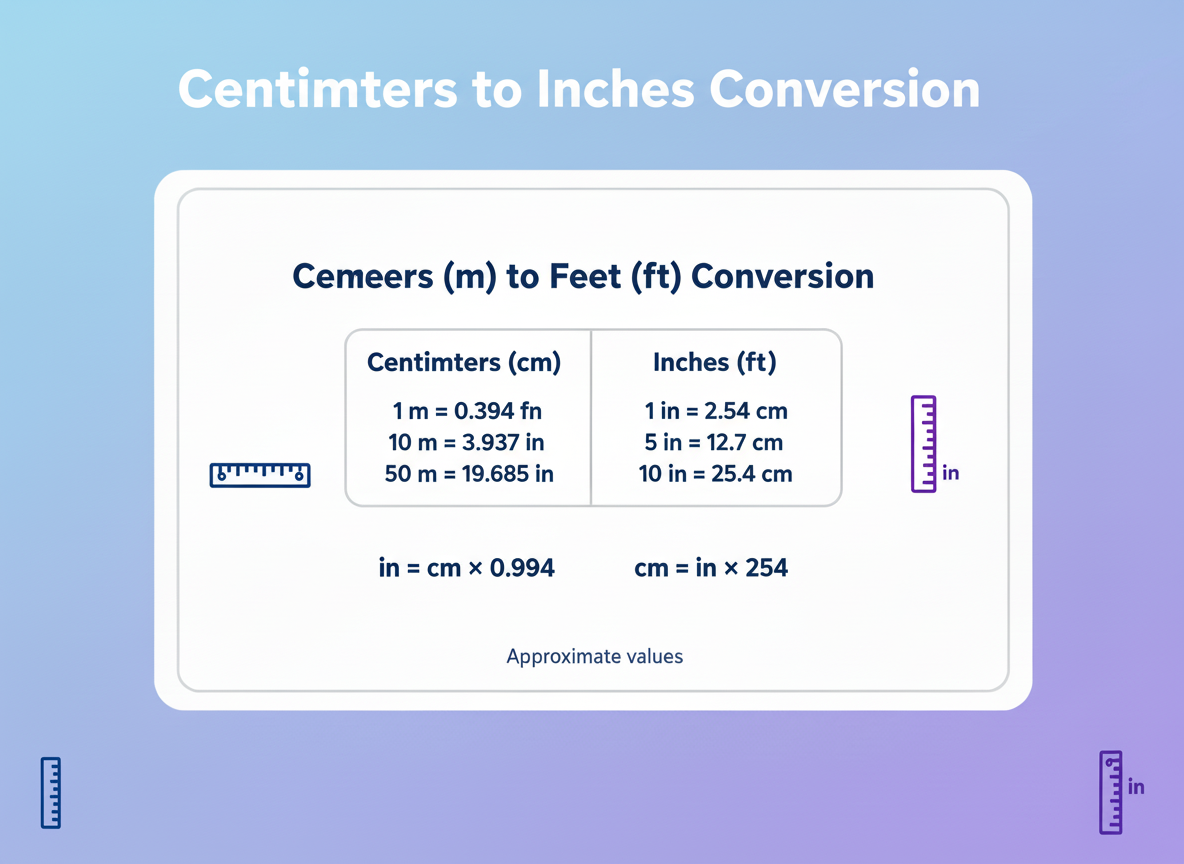
Centimeters to inches conversion is one of the most common length conversions used worldwide. Whether you are measuring height, screen sizes, clothing, or construction materials, understanding how to convert centimeters (cm) to inches (in) is essential.
What Is a Centimeter?
A centimeter is a unit of length in the metric system. It equals one-hundredth of a meter and is widely used for everyday measurements such as height, objects, and dimensions.
What Is an Inch?
An inch is a unit of length in the imperial system. One inch equals 2.54 centimeters. Inches are commonly used in the United States for measuring screens, furniture, and body dimensions.
Conversion Formula
Inches = Centimeters × 0.393701
Step-by-Step Example
- Convert 50 cm to inches
- 50 × 0.393701 = 19.685
- Result: 50 cm = 19.69 inches
What is an Inch (in)?
An inch is a unit of length in the imperial system. It is widely used in countries like the United States and is common in industries such as construction, manufacturing, and electronics.
1 inch = 2.54 centimeters
Inches are commonly used for:
- Screen sizes (TVs, monitors, phones)
- Construction measurements
- Hardware and tools
- Furniture dimensions
—
Centimeters to Inches Formula
To convert centimeters into inches, use this formula:
Inches = Centimeters × 0.393701
This means that each centimeter is equal to approximately 0.393701 inches.
You can also use the reverse relationship:
Inches = Centimeters ÷ 2.54
—
Quick Conversion Examples
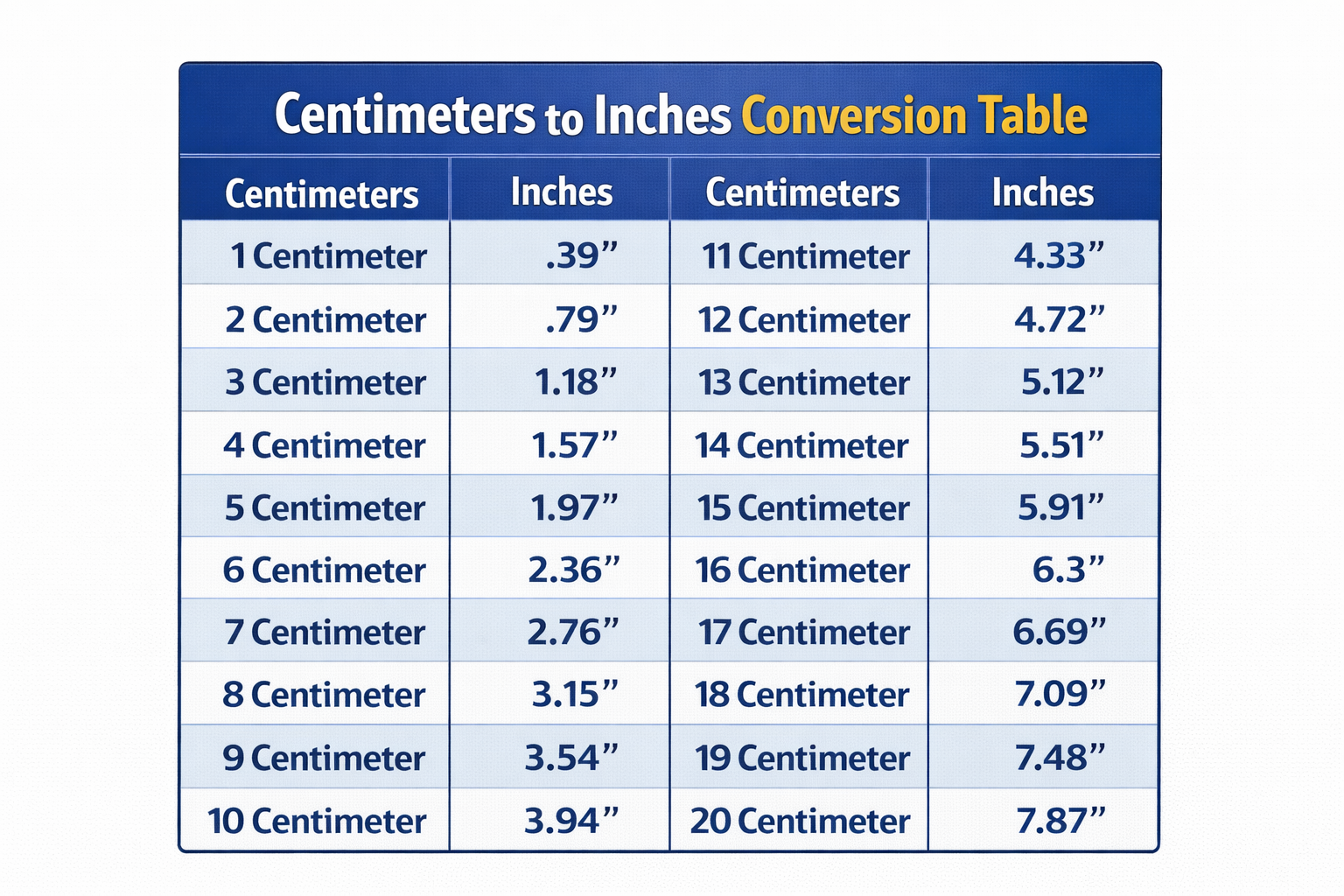
- 1 cm = 0.39 in
- 5 cm = 1.97 in
- 10 cm = 3.94 in
- 20 cm = 7.87 in
- 30 cm = 11.81 in
- 50 cm = 19.69 in
- 100 cm = 39.37 in
—
—
Step-by-Step Conversion
Example: Convert 25 cm to inches
- Start with 25 cm
- Multiply by 0.393701
- Calculate:
25 × 0.393701 = 9.84 inches
Final Answer: 25 cm = 9.84 inches
—
Why Convert Centimeters to Inches?
1. International Measurements
Different countries use different measurement systems. Converting cm to inches helps when working with global standards.
2. Online Shopping
Clothing and product dimensions may be listed in centimeters or inches depending on the region.
3. Construction and DIY Projects
Many tools and materials are measured in inches, while plans may use centimeters.
4. Technology and Screens
Screen sizes are almost always measured in inches, even in countries that use centimeters.
Quick Mental Conversion Trick
If you need a quick estimate:
👉 Divide centimeters by 2.5
- 10 cm ≈ 4 inches
- 50 cm ≈ 20 inches
This method is not exact but useful for quick calculations.
—
Reverse Conversion (Inches to Centimeters)
Centimeters = Inches × 2.54
Examples:
- 10 inches = 25.4 cm
- 20 inches = 50.8 cm
- 40 inches = 101.6 cm
—
Real-Life Examples
📏 Height Measurement
180 cm ≈ 70.87 inches
📺 TV Size
50-inch TV ≈ 127 cm
🪑 Furniture
120 cm table ≈ 47.24 inches
—
Common Mistakes
- Using incorrect conversion factors
- Mixing inches with feet
- Rounding too early
- Forgetting that 1 inch = 2.54 cm
—
cm to inches, centimeters to inches, convert cm to inches, cm to in formula, how many inches in a cm, cm to inch converter
—
Conclusion
Converting centimeters to inches is simple when you know the formula:
Inches = Centimeters × 0.393701
This conversion is essential for everyday measurements, international use, shopping, construction, and technology. By understanding and applying this formula, you can easily switch between metric and imperial units with confidence and accuracy.
Most Used Conversions
Frequently Asked Questions
How do you convert Centimeters to Inches Conversion: Complete Guide with Formula and Examples?
To convert between units, multiply the value by the correct conversion factor. Our calculator automatically applies this formula to give you an instant and accurate result.
What is the formula for Centimeters to Inches Conversion: Complete Guide with Formula and Examples?
The conversion formula is based on a fixed relationship between the two units. In general, you multiply the input value by a constant factor to get the converted result.
Is this conversion calculator accurate?
Yes. This tool uses standardized conversion formulas and internationally accepted measurement definitions to ensure precise results.
Can I convert decimal values?
Yes. You can enter decimal numbers and the calculator will return highly accurate results instantly.
Why is unit conversion important?
Unit conversion ensures consistency across different measurement systems such as metric and imperial. It is essential in science, engineering, construction, and everyday calculations.
Which measurement systems are supported?
This converter supports both metric (SI units) and imperial systems, allowing accurate conversions across different standards.
Can I use this tool on mobile devices?
Yes. The converter is fully responsive and works on mobile phones, tablets, and desktop devices.
Is this tool free to use?
Yes. The converter is completely free and available for unlimited use without any restrictions.