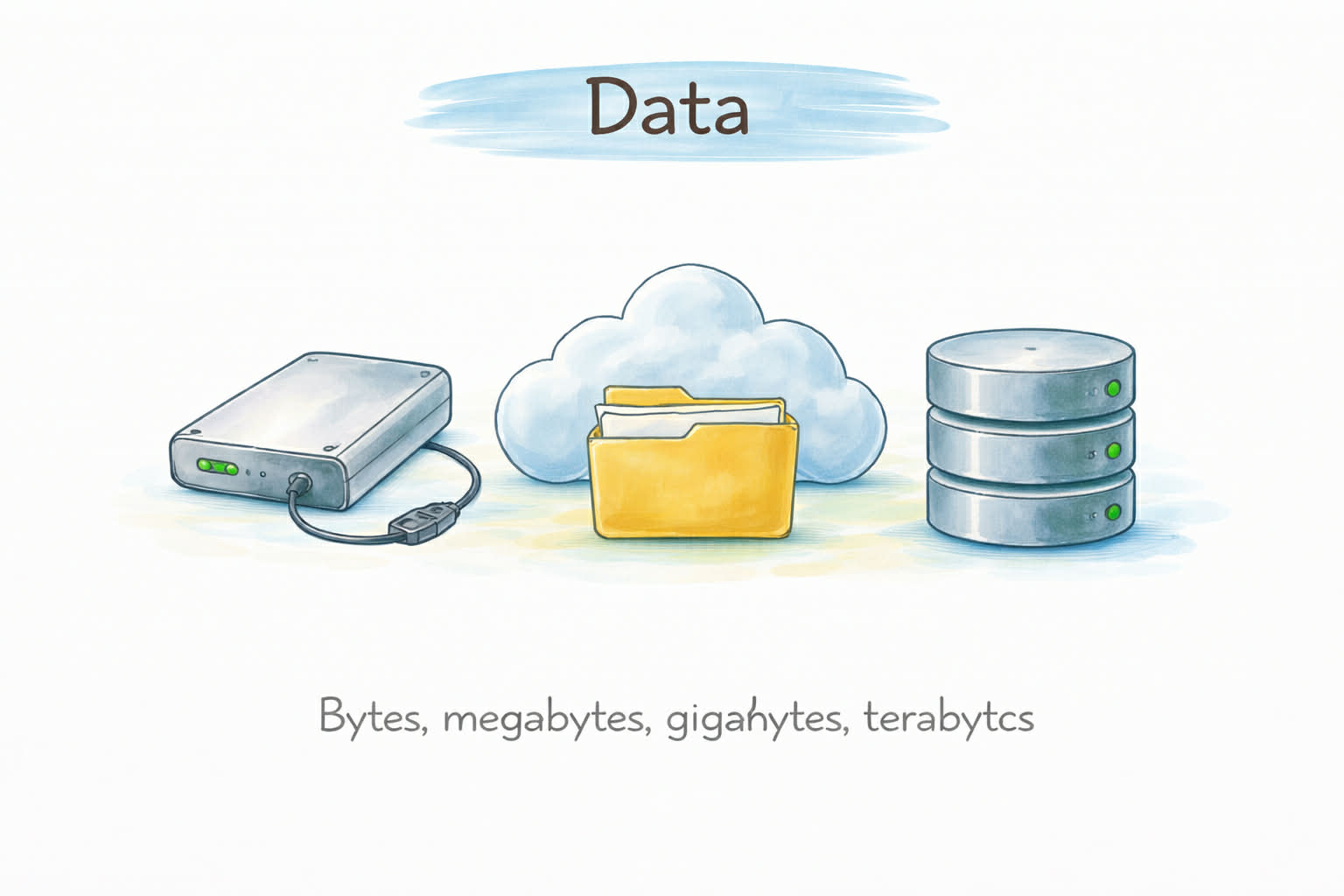
What is Data Conversion?
Data conversion is the process of converting digital information from one unit of measurement into another while preserving the same amount of data.
In computing and technology, data is measured in units such as bits, bytes, kilobytes (KB), megabytes (MB), gigabytes (GB), and terabytes (TB).
As digital systems continue to grow, understanding data sizes has become essential for everyday tasks such as file storage, internet usage, and data transfer.
Different units are used depending on the scale of the data, from small files measured in bytes to massive datasets measured in terabytes.
Data conversion allows users to accurately compare, calculate, and manage digital information across different platforms and systems.
Why Data Conversion is Important
Data conversion plays a critical role in modern technology and everyday digital life.
Without proper conversion, understanding file sizes and storage limits would be difficult.
- Storage: Devices use different units to represent capacity (GB, TB)
- Internet: Data usage is measured in MB or GB
- Software: File sizes must be understood across systems
- Cloud Computing: Storage and transfer depend on accurate data units
- Gaming & Media: Downloads require clear size understanding
Accurate data conversion helps users manage storage efficiently and avoid exceeding limits.
How Data Conversion Works
Data conversion is based on fixed relationships between units.
The smallest unit of data is the bit, and the most commonly used unit is the byte.
For example:
- 1 byte = 8 bits
- 1 kilobyte (KB) = 1000 bytes
- 1 megabyte (MB) = 1000 KB
- 1 gigabyte (GB) = 1000 MB
- 1 terabyte (TB) = 1000 GB
To convert data units, values are multiplied or divided by these constants.
Some systems also use binary conversions (1024 instead of 1000), especially in operating systems.
This standardized structure ensures accurate and consistent conversions.
Common Data Units Explained
Data is measured in different units depending on the size and application.
💾 Small Data Units
- Bits
- Bytes
- Kilobytes (KB)
📀 Large Data Units
- Megabytes (MB)
- Gigabytes (GB)
- Terabytes (TB)
Smaller units are used for individual files, while larger units represent storage capacity and large datasets.
Common Data Conversions
Here are some of the most frequently used data conversions:
- 1 byte = 8 bits
- 1 KB = 1000 bytes
- 1 MB = 1000 KB
- 1 GB = 1000 MB
- 1 TB = 1000 GB
- 1 GB = 1,000,000,000 bytes
These values are widely used in digital systems and online platforms.
Real-Life Examples of Data Conversion
Data conversion is used constantly in everyday digital activities.
- A 1 GB file equals about 1000 MB
- A 4K movie may require 10–50 GB of storage
- A smartphone with 128 GB can store thousands of photos
- A 5 MB image equals 5000 KB
These examples show how data conversion helps users understand file sizes and storage needs.
Data Conversion in Different Industries
Accurate data conversion is essential across many industries where digital information is processed and stored.
- IT & Software: File sizes and memory usage must be calculated precisely
- Cloud Computing: Storage and transfer costs depend on data size
- Media & Entertainment: Video and audio files require large storage
- Telecommunications: Data transfer speeds and limits are measured in MB and GB
- Cybersecurity: Monitoring data flow requires accurate measurement
Even small miscalculations can impact storage efficiency and system performance.
Advantages of Using an Online Data Converter
Online data converters simplify calculations and provide instant results without manual effort.
- Fast and accurate conversions
- Supports multiple data units
- Reduces calculation errors
- Easy to use for all users
These tools are essential for managing digital data efficiently.
Tips for Accurate Data Conversion
- Always confirm whether the system uses base 1000 or 1024
- Use standardized conversion values
- Avoid rounding large data values too early
- Use reliable tools for precise calculations
Following these tips ensures accurate and reliable data conversions.
Conclusion
Data conversion is an essential part of modern digital life.
From managing storage and downloads to working with large datasets, accurate data measurement ensures efficiency and clarity.
By understanding how data units relate and using reliable tools, you can confidently work with digital information in any format.
This page provides the knowledge and tools needed to perform accurate data conversions quickly and efficiently.