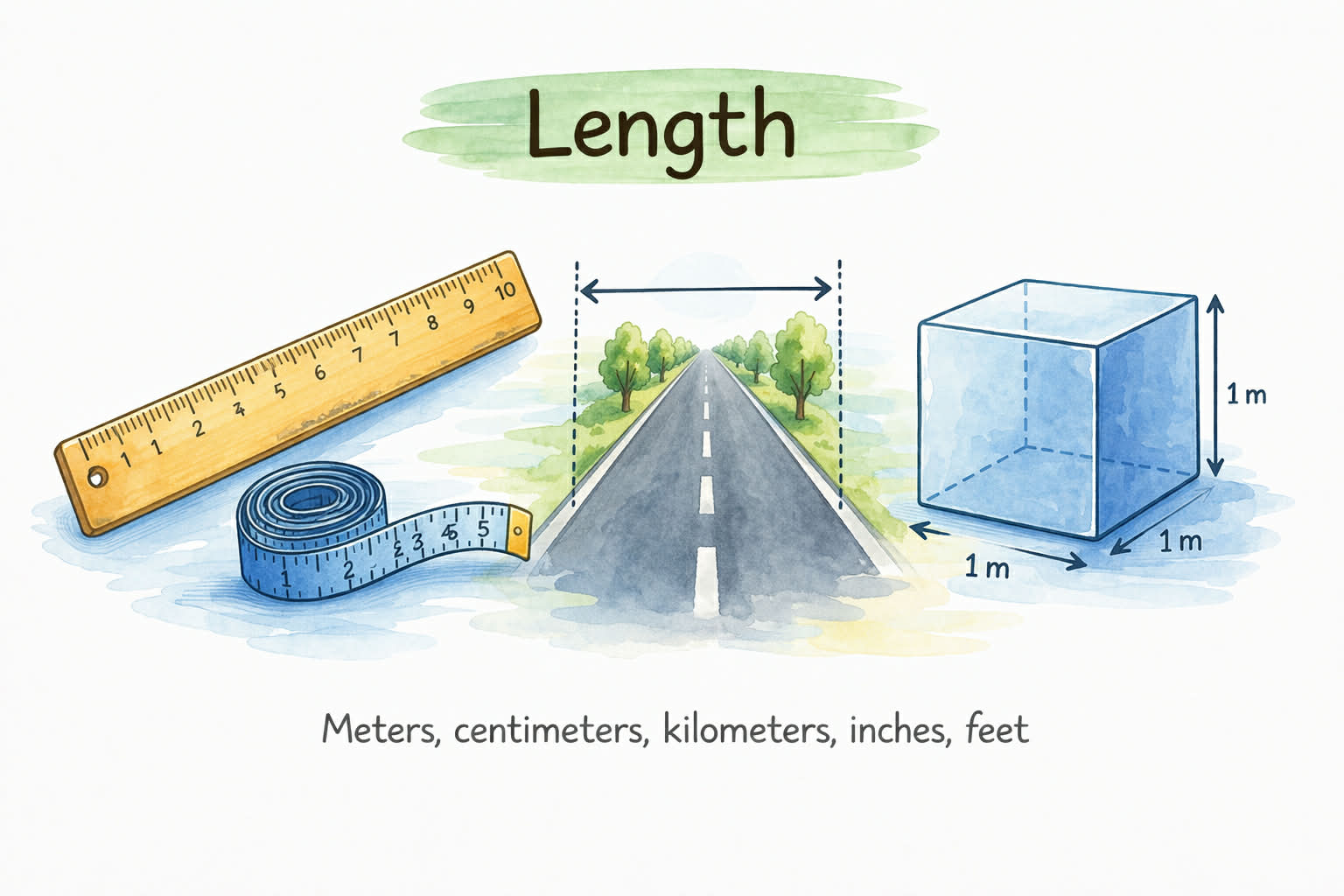
What is Length Conversion?
Length conversion is the process of transforming a measurement from one unit into another while preserving the same physical distance.
This allows different measurement systems to communicate the exact same value in different formats.
In everyday life, length conversion is used when traveling between countries, reading maps, measuring objects, or working with tools and machinery.
In professional fields such as engineering, construction, and science, precise conversions are critical to ensure accuracy and safety.
The two primary measurement systems used worldwide are the metric system and the imperial system.
Understanding how these systems relate to each other is essential for accurate calculations and global communication.
Why Length Conversion is Important
Length conversion plays a crucial role in both everyday tasks and highly technical industries.
Without proper conversion, measurements can be misinterpreted, leading to costly errors or safety risks.
- Travel and Navigation: Road signs, maps, and GPS systems use different units depending on the region
- Construction and Engineering: Accurate conversions ensure structures are built to correct specifications
- Manufacturing: Precision measurements are required for parts to fit and function properly
- Education: Students learn unit relationships and develop problem-solving skills
- Global Trade: Products must meet measurement standards across different countries
Even small conversion mistakes can lead to large discrepancies, especially in industries where precision is critical.
How Length Conversion Works
Length conversion is based on fixed mathematical relationships between units.
These relationships are standardized and internationally recognized to ensure consistency.
Most conversions follow a simple two-step process:
- Convert the original value into a base unit (typically meters)
- Convert from the base unit into the desired unit
For example:
- 1 kilometer = 1000 meters
- 1 mile = 1609.34 meters
To convert kilometers to miles, you first convert kilometers into meters, then divide by the number of meters in a mile.
This standardized approach ensures that conversions remain accurate across all applications.
Metric vs Imperial Systems
The metric and imperial systems are the two most commonly used systems for measuring length.
Each system has its own structure and method of defining units.
📏 Metric System
Used globally and based on powers of ten, making it easy to convert between units.
- 1 meter = 100 centimeters
- 1 kilometer = 1000 meters
- 1 centimeter = 10 millimeters
📐 Imperial System
Primarily used in the United States and based on non-decimal relationships.
- 1 foot = 12 inches
- 1 yard = 3 feet
- 1 mile = 5280 feet
Because the imperial system is not based on a consistent scale, conversions are often more complex and require tools or formulas.
Common Length Conversions
Below are some of the most commonly used length conversion values:
- 1 kilometer = 0.621371 miles
- 1 mile = 1.60934 kilometers
- 1 meter = 3.28084 feet
- 1 foot = 0.3048 meters
- 1 inch = 2.54 centimeters
- 1 yard = 0.9144 meters
These values are standardized and widely used in science, engineering, and everyday applications.
Real-Life Examples of Length Conversion
Understanding real-world applications makes length conversion more practical and easier to grasp.
- A marathon distance of 42.195 kilometers equals approximately 26.2 miles
- A standard doorway height of 2 meters is about 6.56 feet
- A smartphone measuring 6 inches is roughly 15.24 centimeters
- A football field of 100 yards equals about 91.44 meters
These examples show how conversion helps translate measurements into familiar units.
Length Conversion in Different Industries
Accurate length conversion is essential across many industries where precision and consistency are required.
- Engineering: Structural integrity depends on precise measurements
- Architecture: Building designs must account for different unit systems
- Aviation: Distances and altitudes require exact conversions
- Logistics: Shipping dimensions affect packaging and costs
- Healthcare: Measurements are used in equipment and diagnostics
In these fields, even minor errors can lead to serious consequences, making reliable conversion tools essential.
Advantages of Using an Online Length Converter
Online length converters simplify the process of converting units and eliminate the need for manual calculations.
- Instant and accurate results
- Supports multiple unit systems
- Reduces the risk of human error
- Easy to use for both beginners and professionals
These tools are especially useful in situations where quick and reliable conversions are required.
Tips for Accurate Length Conversion
- Always verify the units before converting
- Use trusted tools or formulas for complex calculations
- Understand basic relationships between units
- Avoid rounding values too early in calculations
Following these best practices helps ensure precise and reliable conversion results.
Conclusion
Length conversion is an essential skill used in everyday life and across multiple industries.
From travel and construction to science and engineering, accurate measurement ensures clarity, efficiency, and safety.
By understanding how units relate to each other and using reliable conversion tools, you can confidently work with measurements in any system.
This page provides both the knowledge and tools needed to perform accurate length conversions quickly and efficiently.